Yumindo
From a thought to an image, in seconds.
Yumindo turns a spoken or typed thought into a beautiful, shareable image, in four curated styles. Built on FLUX.
What I want to explore with FLUX 3
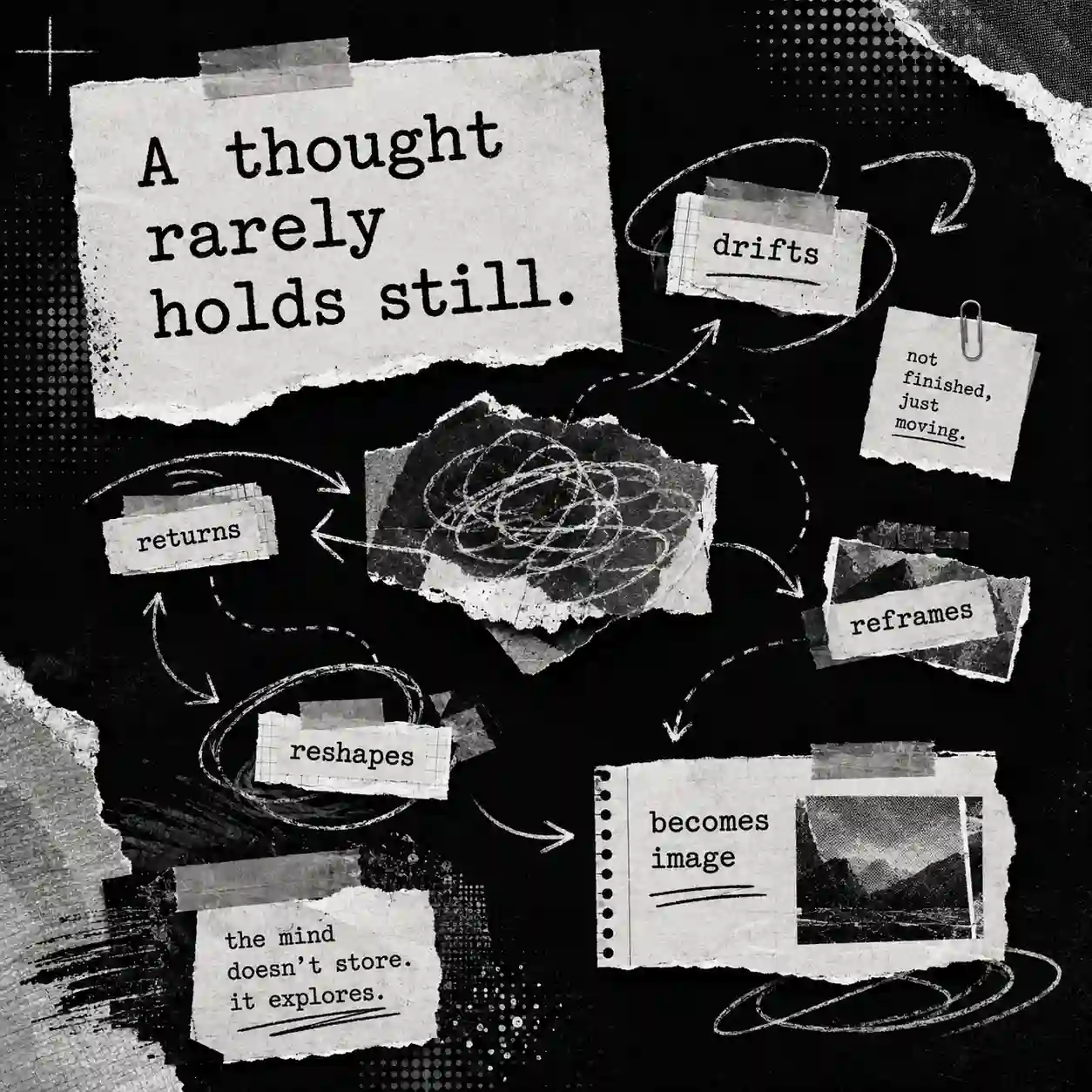
A thought, a moment you want to hold onto, an image already forming in your head: it rarely stays put. It drifts, flickers, keeps moving. Today Yumindo captures it as a still image. With FLUX 3 I want to ask whether that image could move too, gently, closer to how it felt: not a loud clip, but subtle motion. Leaves caught in a gust, steam curling off a cup, a scene that stirs and comes alive.
I'm approaching this as an open experiment. The honest question is whether motion strengthens the captured moment or dilutes it, and whether sound belongs at all. That's exactly what I'd want to find out with FLUX 3's image-to-video, starting from the image Yumindo already produces.
Beyond the motion experiment, I'd also move Yumindo's existing image pipeline to FLUX 3, for sharper subject fidelity.
Four styles
One thought, rendered four ways.
Yumindo renders each thought in four distinct styles. You compare them and keep the one that captures the moment best.




How it works
From language to image.
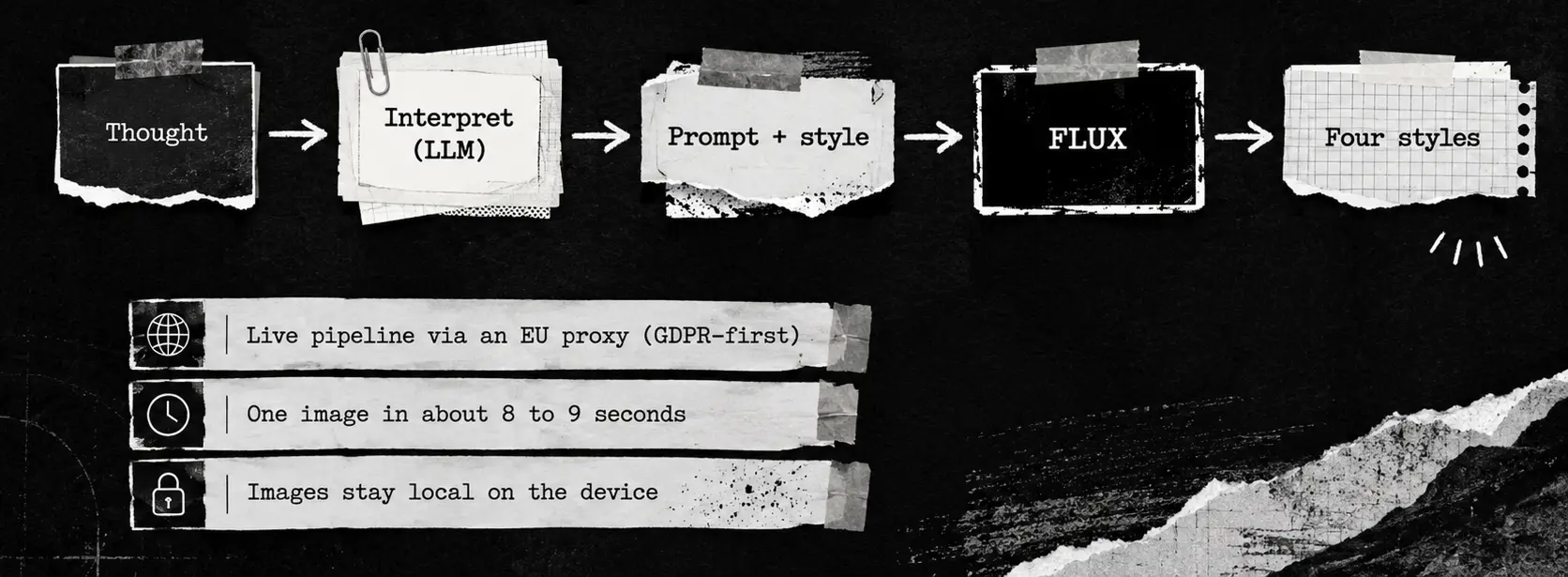
A thought runs through a small pipeline: first a language model interprets the thought, its subject and tone. From that an image prompt is built and combined with a fixed style modifier. FLUX generates the image from it, in four styles.

Elisabeth Wimmer
I'm a product designer. After many years shaping digital products, I now use AI to close the gap between an idea and a real, tested product, building and shipping, not just designing concepts. Yumindo is that approach in practice, and how I keep exploring what new models like FLUX make possible.